

DC motors
In our platform-based design, we manufacture electric motors exclusively using proven parts, modules, and components. This allows us to cover motor series up to size 355 and reliably deliver a wide range of performance parameters. For motors with special requirements or extended specifications, we develop and produce custom solutions precisely tailored to each customer’s needs.
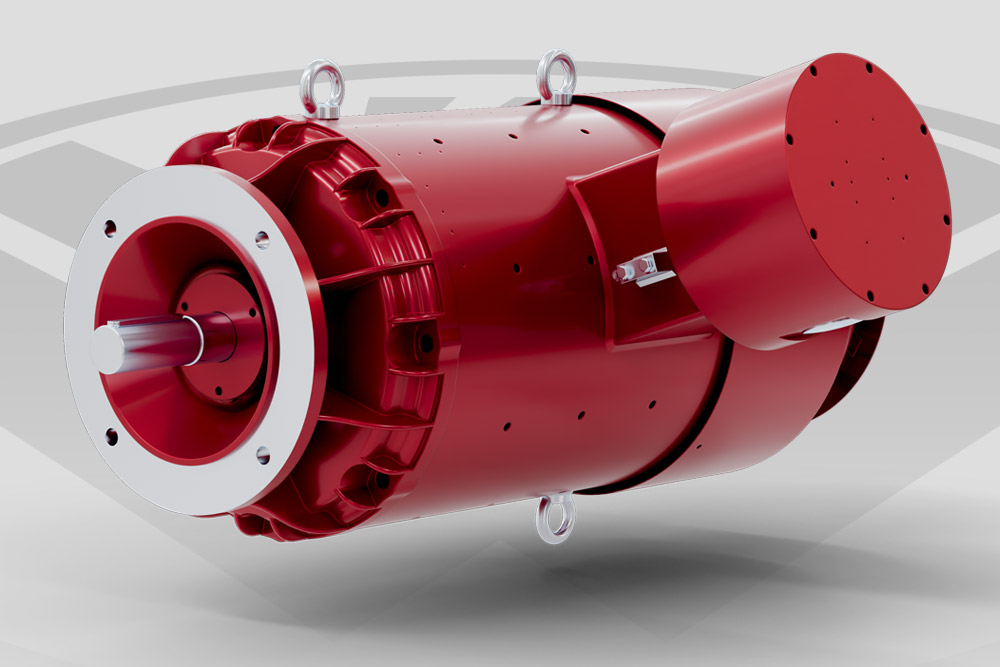
Explosion-proof DC motors
Our explosion-proof DC motors provide certified explosion protection for Zone 1 and 2. With flexible parameters, robust construction, and low-vibration design, they ensure maximum safety, durability, and reliable performance in demanding industrial applications.
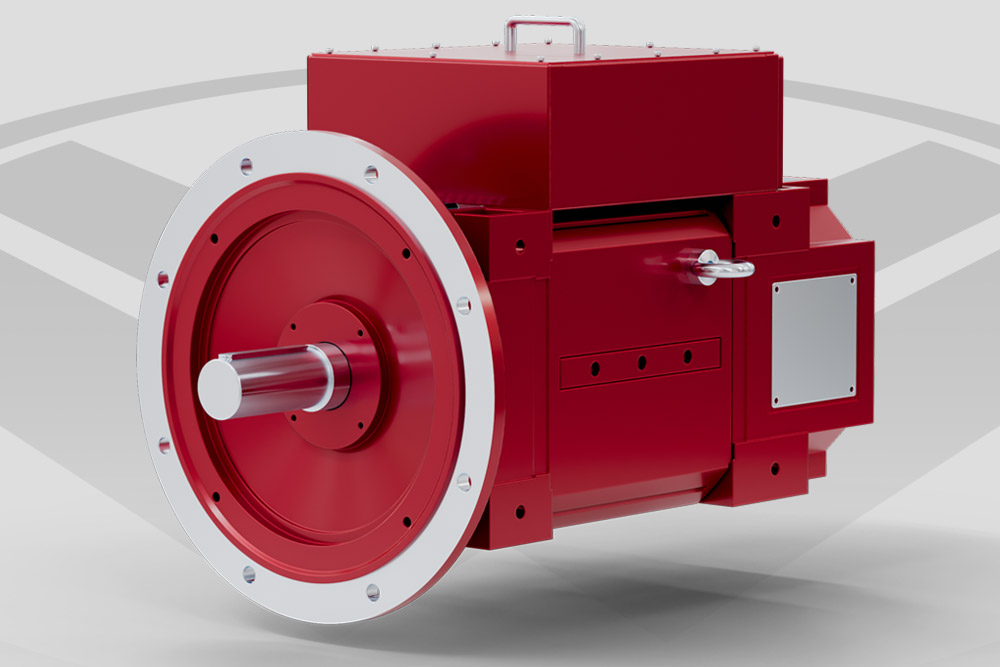
Compact DC motors
Compact DC motors from WINKELMANN combine high power density with a space-saving design. They feature flexible electrical configurations, robust mechanics, innovative internal cooling, and high dynamics. These motors ensure reliable continuous operation, precise control, and long service life even under demanding conditions.
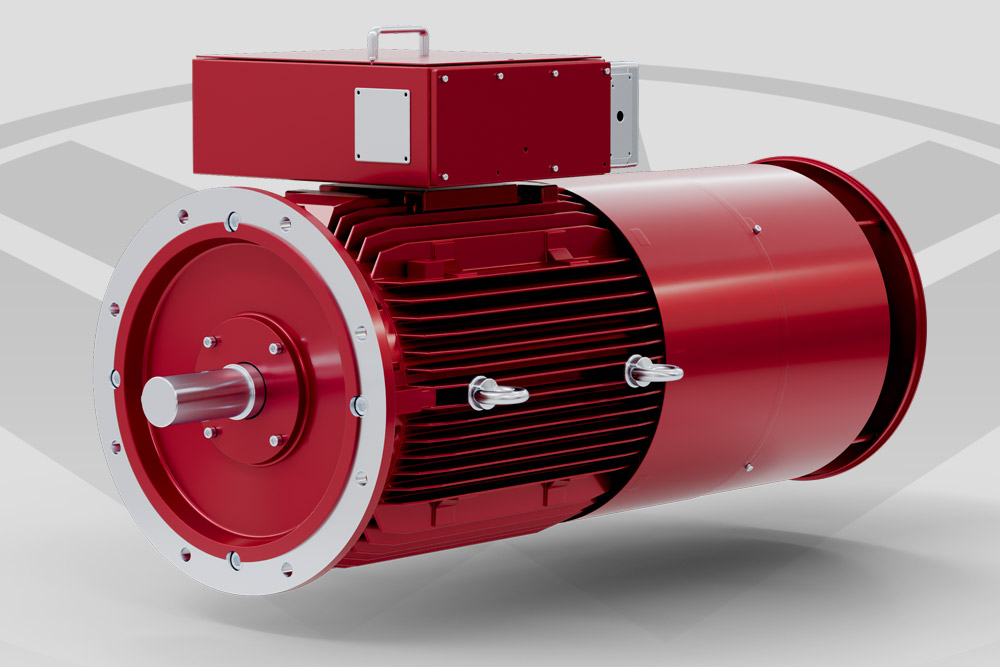
IEC DC motors
WINKELMANN’s IEC DC motors provide robust and standards-compliant drive solutions. With high torque reserves, flexible standard combinations, low-vibration design, and optional adaptation to pump characteristics, they ensure long-lasting continuous operation, reliable performance, and energy-efficient integration into a wide range of systems worldwide.
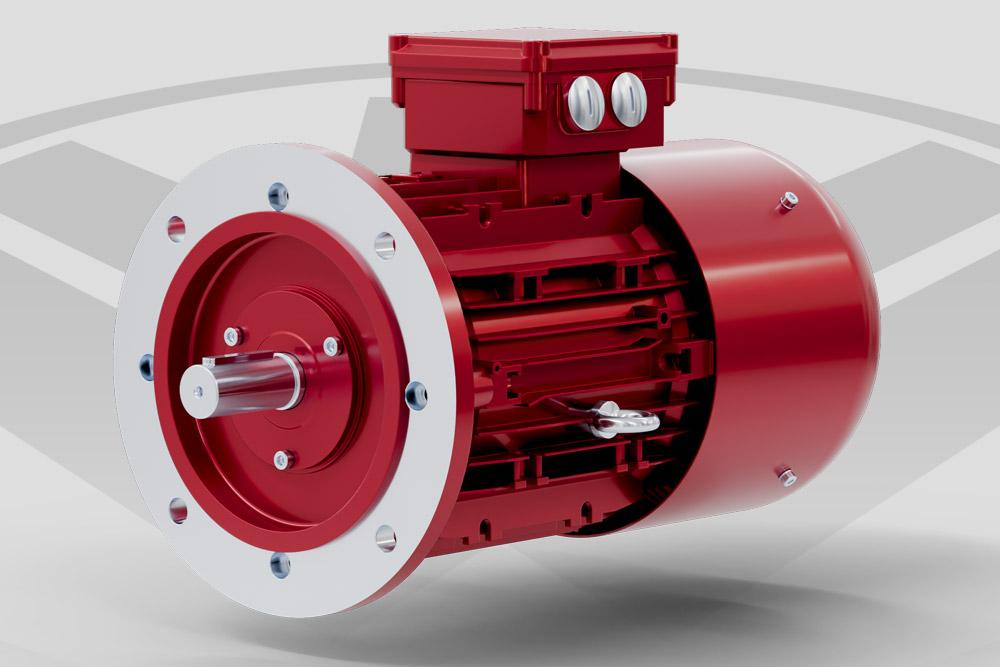
Permanent magnet DC motors
Our permanent magnet DC motors deliver high energy efficiency, compact design, and precise speed control. With strong torque, dynamic responsiveness, and overload capability, they are ideal for industrial processes with frequent load changes and confined installation spaces.
DC Motors from WINKELMANN
WINKELMANN’s dc motors stand for powerful, reliable, and customizable drive solutions for industrial applications. As an experienced manufacturer, WINKELMANN develops and produces high-quality dc motors for demanding applications across various industries – from power generation and mining to rail vehicles, pumping systems, and industrial test stands.
A dc motor is one of the most established electrical drive systems in industry. Its precisely controllable speed, high starting torque, and stable torque characteristics make this motor type particularly suitable for applications with high dynamic requirements. WINKELMANN combines these technological advantages with decades of experience in industrial drive systems development, offering tailor-made solutions for complex machinery and plant designs.
Typical applications of WINKELMANN dc motors include conveyor systems, pumping systems, cranes, test stands, rail vehicles, and industrial production facilities. Especially where exact control of speed and torque is required, a dc motor offers decisive advantages over other drive technologies.
Another benefit is the flexible adaptability to different requirements. Modern dc motors can be individually configured in terms of voltage, power, speed range, and mechanical design. This allows them to be integrated into new machinery concepts or seamlessly replace existing drive systems.
To fully understand the potential of this drive technology, it is useful to examine the dc motor structure and the dc motor operation principle, which explain the physical principles behind this proven motor type.
DC motor structure
The dc motor structure is crucial for its performance, efficiency, and lifespan. Although various designs exist, all dc motors are based on the same central components, which together enable the reliable conversion of electrical energy into mechanical motion.
At its core, a dc motor consists of a stationary part, the stator, and a rotating part, the rotor (or armature). The stator generates the necessary magnetic field, which is formed either by permanent magnets or an electrically powered field winding, depending on the design. This magnetic field is the foundation for the electromagnetic force that generates torque and drives the rotor.
The rotor is connected to the motor shaft and carries windings through which current flows during operation. The interaction between the rotor’s electromagnetic field and the stator’s magnetic field produces rotational motion, converting electrical energy into mechanical energy.
A key element of the dc motor structure is the commutator, which, together with brushes, continuously adjusts the current direction in the rotor windings. This keeps the rotation direction constant, ensuring smooth motor operation.
Additionally, mechanical components such as high-quality bearings and a robust housing are essential. They provide vibration-free operation, protect against dust, moisture, and mechanical impacts, and significantly extend the motor’s lifespan.
Thanks to this well-thought-out dc motor structure, the motors can be flexibly adapted to different performance requirements and industrial conditions. Their modular design also allows for individual adjustments in size, power, or cooling.
DC motor operation principle
The dc motor operation principle relies on the close interaction between the rotor, windings, and stator field, based on electromagnetic induction. When current flows through the rotor windings, each coil generates a magnetic field. This field interacts with the stationary stator magnetic field, producing torque that turns the rotor shaft and converts electrical energy into mechanical energy.
Rotor windings are made of insulated copper wire surrounding the core. When current passes through these windings, the rotor field induces a force on the stator poles – a classic example of electromagnetic induction. The commutator cyclically reverses the current in the windings so that the magnetic field continuously aligns to keep the rotor turning. The type of winding connection – series, parallel, or compound – directly affects torque, speed, and starting behavior.
The commutator and brushes ensure that current in the rotor windings is optimally controlled, resulting in smooth rotation. By precisely regulating voltage and current in the windings, both speed and torque can be accurately controlled.
This combination of dc motor structure and the dc motor operation principle explains why dc motors are widely used: they deliver high starting torque, allow precise control, and are ideal for power tools, robotics, conveyor systems, and vehicle drives. Only the carefully designed combination of rotor, windings, commutator, and stator ensures reliable dc motor operation.
Modern adaptations and custom solutions
Another advantage of dc motors is their high flexibility through modular construction. WINKELMANN offers motors that can be individually tailored for voltage, speed, power, and mechanical design. Besides standard solutions, custom versions are available, including different cooling types, protection classes, shaft ends, or permanently excited designs.
This adaptability allows dc motors to be precisely integrated into complex machinery and industrial plants. They optimize energy efficiency, torque characteristics, and operational reliability, even under extreme conditions such as heavy dust, moisture, or strong mechanical stress. Custom solutions can also include braking systems, specialized fans, or additional mechanical components, ensuring each motor is perfectly suited for its application.
This flexibility and customization make WINKELMANN dc motors an ideal choice for industrial projects that require precision, reliability, and long-lasting performance. Users benefit from reduced maintenance intervals, energy-efficient operation, and consistent performance over years.

